


U.S. and Canadian rates are taking different paths. Scotiabank strategists examine the forces driving yields and what could shape markets through year-end.
28 min listen
Episode summary:
After a turbulent year so far for global bond markets, U.S. and Canadian rates are telling different stories. In this episode of Market Points, Scott Morrison, Managing Director and Head of Interest Rates Solutions, Commercial FX and Emerging Markets Sales, Canada, is joined by Boris Sender, Director, U.S. Rates Strategy, and Roger Quick, Director, Canadian Fixed Income Strategy, to examine the forces behind the sharp rise in yields and what may come next.
They discuss the resilience of U.S. growth, shifting expectations for the Federal Reserve and Bank of Canada, and the pressures driving long-term yields. The conversation also looks ahead to the data, policy decisions, and market dynamics that could influence market direction as 2026 draws to a close.
This communication does not constitute investment advice or any personal recommendation to invest in a financial instrument or “investment research”. This communication is provided for information and discussion purposes only. An investment decision should not be made solely on the basis of the contents of this communication. It is not to be construed as a solicitation or an offer to buy or sell any financial instruments and has no regard to the specific investment objectives, financial situation or particular needs of any recipient. The information in this communication is based on publicly available information and although it has been compiled or obtained from sources believed to be reliable, such information has not been independently verified and no guarantee, representation or warranty, express or implied, is made as to its accuracy, completeness or correctness. Past performance or simulated past performance is not a reliable indicator of future results. Forecasts are not a reliable indicator of future performance.
This media is intended for informational purposes only and is a communication on behalf of Scotia Capital (USA) Inc. This is not investment research or investment advice, and no recommendation or financial advice is being given. This content is based on information available at the time it was recorded, subject to change without notice, and may not necessarily reflect the institutional views of Scotia Capital (USA) Inc. or its affiliates. Neither Scotia Capital (USA) Inc. nor any of its affiliates make any representations or warranties, express or implied, as to the accuracy or completeness of the statements or information contained herein and disclaim any liability whatsoever for reliance on such information for any purpose. Please refer to our legal disclosures on our website.
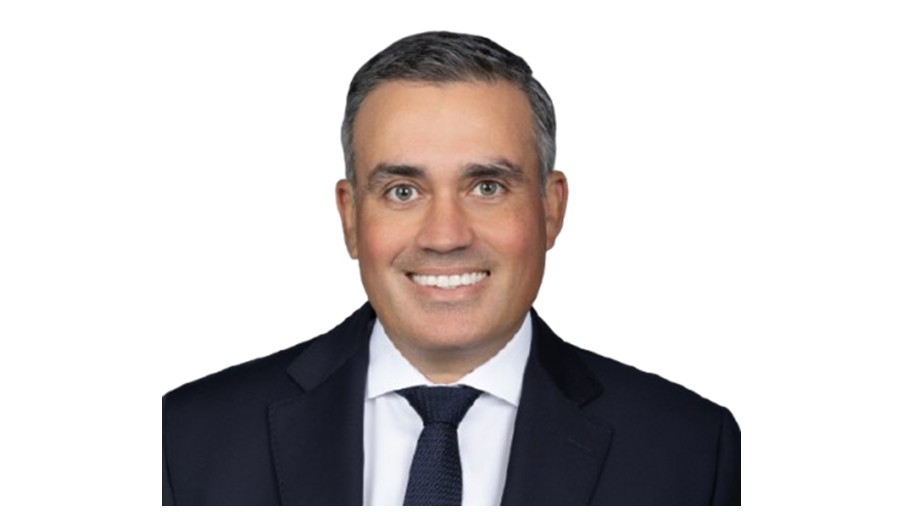
Scott Morrison
Managing Director and Head of Interest Rates Solutions, Commercial FX and Emerging Markets Sales, Canada

Boris Sender
Director, U.S. Rates Strategy

Roger Quick
Director, Canadian Fixed Income Strategy
Announcer: You’re listening to the Scotiabank Market Points podcast. Market Points is designed to provide you with timely insights from Scotiabank Global Banking and Markets’ leaders and experts.
Scott Morrison: Welcome to the Scotiabank Market Points podcast. My name is Scott Morrison, Managing Director and Head of our Interest Rate Solutions and Commercial Banking FX Sales Team in Canada here at Scotiabank.
We are recording this episode on September 29th, 2026, and today we will be discussing what's been a very busy and turbulent year so far, and whether the bond market can some stability after what's been a very rapid sell-off.
Joining me on the episode from New York is Boris Sender, Director, U.S. Rate Strategy. Boris, great to have you with us.
Boris Sender: Thanks for having me, Scott
Scott Morrison: And from our Toronto office, Roger Quick, Director, Canadian Fixed Income Strategy. Roger, thanks for joining.
Roger Quick: Thanks, Scott. Great to be here.
Scott Morrison: So, we're going to start with the level set and a bit of a postmortem. This year's moves in borrowing costs has caught a lot of market participants off guard.
We've seen significant rise in yields across the curve and across a number of markets. Boris, let's start with you. What do you make of the moves in the U.S. yields, and how did we get here?
Boris Sender: Yeah, it's the topic du jour, and the sell-off has been pretty tremendous so far year to date with the front end of the U.S. moving by more than 100 basis points, the 10-year almost 100 basis points as well year-to-date. And so, there's a lot of questions around what's really driving it, and in my mind, there's really a couple legs to the stool.
I think the first component, and just to recognize where we came from, which is at the start of the year, I think consensus was very much underappreciating the degree to which we would have this growth acceleration in the U.S. in 2026, which I thought largely would take place on the benefits of the tax bill. Which would put gasoline in the fire of the CapEx build-out. And what I saw as a very good setup for the consumer over the course of the year, both as a result of the tax bill, but also because of solid income growth, et cetera.
And what we saw over the course of the year is that we saw the pendulum swing significantly from the pricing of cuts in the beginning of the year to now the pricing of a fairly dramatic hiking cycle in the U.S., as the Federal Reserve tries to combat the residual inflation that's still present in the economy.
Scott Morrison: Roger, wanted to get your perspective from a Canadian borrowing cost perspective. Yields have risen significantly as well, but the move has been much less pronounced than in the U.S., and Canadian bonds have meaningfully outperformed U.S. Treasuries.
Have the drivers been different in Canada, and why have Canadian yields lagged the move in the U.S.?
Roger Quick: Some of the factors driving Canada have been similar and some different. We obviously started at a much lower level of yields. So, we have seen yields increase materially as well. We haven't been immune from this sell-off. But we haven't had our yields rise to the same extent as in the U.S. or elsewhere in Europe, et cetera.
There's a few reasons for this. I mean, one is the fiscal picture, and I don't want to understate, Canada's deficit and things like that. It is a large deficit by historical standards. But as a percentage GDP, we have a smaller deficit than in the U.S. and some of our peers. At the federal level, we're at about 1.9% of GDP compared to, say, close to 6% in the U.S. If you add in the provinces, that's not quite another percentage point, so call it 2.8% of GDP combined, versus, you know, 6% in the U.S. So, the fiscal picture is better by an international comparison.
Other factors are growth in Canada has been slower. Macklem, the Bank of Canada governor, has pointed this out recently. The U.S. is the epicenter of the AI boom, so they've benefited more from that. That's still in the earlier stages in Canada. Inflation here has also been lower. So, there's a number of factors why our yields have been lower and why they haven't increased as much to the extent that it is, you know, concern about the fiscal picture.
I don't want to minimize those concerns, but they aren't at the more acute levels that they are in some of our competing countries including the U.S.
Scott Morrison: Boris, at the start of the year, markets were pricing two Fed cuts, and since then the Fed has hiked once, and markets are now pricing almost another 100 basis points of tightening over the next year. How did expectations change so dramatically?
Boris Sender: I think it goes back to one of the points I made about kind of the starting point and consensus being, I think, overly negative, I think, on the U.S., and I think also just extrapolating from the weak labor market that we had last fall. As a reminder, you know, the unemployment rate went from about 4% to 4.5% last fall, and under that premise the Fed delivered three insurance cuts last year.
And what we saw over the course of the first half of '26 is that the labor market actually stabilized quite a bit. The unemployment rate back down to the low 4% area. And I think that got the Fed to kind of reconsider the employment side of the mandate and was able to fixate on the inflation side, which on a trend basis was in the low 3% area, core PCE.
That's stripping out energy prices and all of that volatility, and it pretty much remained in that low 3% area over the course of this year. Whether you look at a three-month, six-month, 12-month moving average, we're pretty much in that context. And I think it was just remaining too sticky for too long and considering the Fed has missed its inflation mandate for five years, I think that they think it's prudent to remove the insurance cuts that they put in place last year.
And so that's how we got to the first rate hike that was delivered a few weeks ago, and I think in much of the FOMC committee's mind, that's what they have planned for the remainder of this hiking cycle.
Scott Morrison: Roger, let's talk about the Bank of Canada. They have not raised rates since 2023, but markets are now pricing roughly 125 basis points of tightening over the next year. Despite an economy still in excess supply and core inflation around 2%, does that look justified to you?
Roger Quick: There's been a number of factors driving this particularly in the last month. One was the somewhat more hawkish Bank of Canada meeting at the beginning of September, and then also the events globally with oil prices rising and the Fed also turning more hawkish.
So, let's start with the Bank of Canada meeting on September 2nd. You know, I think going into that meeting, we just had the trade negotiations break down again in late August, and the market was focused a lot on the downside risks to growth from the trade dispute heating up again and the uncertainty coming back. And I think what the Bank of Canada wanted to do at that September meeting was remind investors that while there is this downside risk to growth from the trade side and the uncertainty, there's also this upside risk to inflation as energy prices started to rise again and had been elevated for longer than, than they had been anticipating.
And then we, you know, we had a continued rise in oil prices since then, and we also had the more hawkish Fed which really started with Warsh's Jackson Hole speech back in, in August, but accelerated through the month, and then the Fed raised rates and delivered a more hawkish statement as well.
In the end, that's brought yields in Canada up substantially. We're now pricing, as you said, over 125 basis points of rate increases over the next year. In my view, that's more aggressive now than what our economics group had been forecasting, which was already a I guess, a more hawkish forecast than, than the Street had been.
You know, lots can happen between now and then. My guess would be lots of things would have to go right to get the Bank of Canada to raise by that much over the next year and a bit. So, I think they probably, you know, yields probably end up being lower than what's currently implied in the market now.
But yeah, it has been a significant shift driven by both some domestic factors and some international.
Scott Morrison: Some of the most striking moves have been further out the curve, where long-term yields have pushed to levels we haven't seen in decades. Boris, what's been driving the long end, and what should we make of the response we're starting to see from policymakers around the world?
Boris Sender: That's certainly a question that has gained a lot of attention over the last couple of weeks. 30-year yield just reached the highest level since 2002.
And one of the driving factors in my mind, and we touched upon this earlier, was just the level of the nominal growth in the U.S. that we've observed this year hasn't really been seen in 20 years, aside from the pandemic experience. And it is historically large shifts in nominal growth that have driven nominal yields. So that, I think, has responded in kind.
If you look at over the last four quarters, nominal growth in the U.S. is about 6.5% and we started the year in the low fives. So, a repricing of 100 or so basis points I think is reasonable, that context.
Now, one of the things that we can observe from a flow perspective, right, if nominal growth is the fundamental driver, to us, the flow driver prior to September really was AI hyperscaler and corporate issuance more broadly. What we observed is that if we count the days when corporate issuance exceeded $15 billion, that the entirety of the move higher in 30-year yields from, call it, start of January to the end of August, was explained on those days.
And that to us, that is the mechanism by which unexpected corporate issuance comes to market and ultimately overwhelms the stock of all in buyers in the market, such that there needs to be selling of government bonds. Again, some of those deals to really get that transaction to clear. We found that to be more acute for hyperscaler issuance days as a lot of those transactions were a bit more unexpected when they did come. To us, that was the primary flow driver up until, I would say, the end of August.
Starting in the beginning of September things have changed quite a bit. The sell-off has become more volatile. The drivers have been more myriad. They've come on kind of issuance days, non-issuance days, on inflation data, days in between.
And the sell-off has really morphed. And in my mind, it is an indication that the sell-off has reached a more acute and volatile phase that is now starting to disconnect with fundamentals. That could be seen from the speed of the sell-off, the fact that it's being accompanied by higher implied volatility.
But also, if you look in the futures market, we see a lot more of the selling activity happening there as judged by open interest, as judged by just the typical behaviors of trend-following participants where we see that being short dollar rates is now one of the highest signal strength trades that they see available to themselves in the universe. So, there's a lot of factors that we are looking at that makes us believe that increasingly, I would say since the start of September, the sell-off is increasingly futures-led and driven by participants that don't necessarily have a fundamental valuation anchor in mind.
Now there has been a series of interventions, I'd call them on the part of policymakers globally. Now, the one that's received the most media coverage has been the U.S. Treasury's decision to increase the size of the buybacks, which came at a unscheduled date. Instead of having been delivered on a scheduled refunding announcement, it was done a couple weeks after. There was a lot of consternation around the size, what will it be ultimately, and so there was a lot of kind of back and forth as to how much will it be, what will be the impact.
But the truth is, is that the intervention started a long time ago. I would probably back the clock up to the start of this year when there was a White House decree for the government-sponsored enterprises to retain more of their mortgage portfolio, do so without interest rate hedges. And so that, I think was the first really large action by kind of federal authority to try to stem the rise in borrowing costs.
Obviously, we've seen the moves by the Treasury. We've seen similar moves globally as well with Japanese Ministry of Finance cutting long bond issuance for the better part of the last two years. And most recently, the Bank of England which has been selling their gilt holdings on the secondary market, the only central bank to do so, has put a moratorium on those sales until April, has announced that they have no intention of selling on the secondary market at least any of their securities longer than 22 years or shorter than eight years.
And everything in between they are going to sell directly to the debt management office as opposed to doing secondary market sales. So, these are clearly a lot of different changes in their selling program, but I think the theme largely remains the same. Policymakers, whether that's central banks, treasuries, I think administrations more broadly, getting a little bit uncomfortable with the speed of the sell-off and trying to lean into and slow down some of these moves, I think is the goal.
Now, so far, it seems like it's not working. But I think that's not a sign that they'll give up anytime soon. I think it's actually a sign that there's probably going to be more of this to come. If all of these interventions haven't worked and the trend is still very much in place, what else can they really do?
And in my mind, I think a much bolder action from the Treasury would be to cut the size of the long bond auction which they will have an opportunity to do so in the first Wednesday of, November. I think it's very much on the cards. It could be one of those steps. And I think you know, there's other possible interventions, but I think the best possible catalyst that we can get is something that changes people's perceptions of the fundamentals, i.e., Inflation trends going lower. So, the inflation report in two weeks' time is an important catalyst.
And finally, the Federal Reserve's communication is also going to be very important. At this point in the sell-off, the terminal rate is now priced above four ninety, almost five percent in terms of where the funds rate is expected go by the end of next year.
Now, that is a kind of a very elevated level considering the inflation problem is, I would say half as bad as it was during the pandemic. And now the funds rate is priced to get to approximately the same peak terminal rate where we got to in 2023 of about five and three-eighths.
So that to me is a sign that the markets are overshooting, and that a lot of a potential reversal moving forward can be triggered by Federal Reserve, which starts to push back against market pricing.
I think it's also worthwhile to mention an anecdote from 2023, where it was a very similar setup. It was a sell-off that was much more driven on debts and deficits as opposed to growth as it was this year. And we got a combination of a dovish FOMC and a reduction in long bond issuance in late October, early November of 2023, and that successfully reversed the sell-off and actually led to a very durable relief rally.
So, there could be a very interesting analog taking place between now and 2023.
Scott Morrison: Thanks, Boris, a lot to digest there. Roger, let's move to the Canadian bond market, which has not experienced the same degree of pressure at the long end. How do you view the Canadian long-term yield story, and should policymakers here be concerned about the level or pace of the move?
Roger Quick: I don't think policymakers here are anywhere close to intervening. I don't think they would want to intervene. I don't think the problem has got to a stage where they would try. As we've already seen, you know, in the U.S., the intervention hasn't worked so far.
They may well try something else as Boris mentioned. Potentially reducing the size of issuance, that could trigger a short-covering rally in the U.S. But to the extent that it's a concern about fiscal deficits, they really at some point have to start addressing the fundamental fiscal problem of elevated deficits there.
For Canada again, I don't want to downplay our elevated deficit but it's not at the more acute levels that it is in the U.S. and some of the other countries in the G7.
So, we do have some fiscal room. Because of that, I don't think it's an acute problem that either the government or central bank would want to intervene in. We have a budget coming up probably in November. It's unlikely that we're going to have massive increases in the deficit at this point.
And if there is a moderate increase, either a stable or moderate increase is kind of what we're forecasting at the moment it's unlikely that there'll be more long bond issuance. It'll be more in kind of the mid part of the curve and the front end. So, I don't think at this stage we're anywhere near having either the government or central bank wanting to intervene in long rates in Canada.
Scott Morrison: We spent a good amount of time looking how we got here, let's talk about what we think will happen here in the future. So, Boris, I'd like to start with you. How high can yields go from here, and what would need to change for this market to stabilize or begin reversing course?
Boris Sender: Now that trend followers are pretty much in control of the market, it could really go to fairly extreme levels. I would like to think that you know, levels I think north of here would bring about some of amount of dip buying.
But the truth of the matter is, is that when conditions get volatile, moves can get potentially very extreme. So, I'm shy about putting a necessarily a line in the sand. That being said, if we kind of think about things a bit more fundamentally the real question in my mind is, if nominal growth took us to these higher yield levels, where is that going to go over the next 12 months?
And if I think about the three legs of the stool that I talked about in the beginning of the podcast in terms of the resilient consumer, the AI CapEx build-out, and the tax bill kind of contributing to higher nominal growth, where are those three legs of the stool moving forward?
And so, you know, if I look at the state of the consumer today, they are spending about 97 cents of every dollar of disposable income they have. They're certainly feeling very buoyant, at least on an aggregate level. Can they really continue to grow their spending 150 basis points more than they see in their income growth every single year?
Because if those trends were to continue, they'll be spending more than a hundred cents of every disposable dollar within the next two years. So, in my mind, it's only really sustainable for a finite period of time.
The second thing is the hyperscaler build-out has certainly been very rapid. This year has contributed probably, I would estimate, a third to 40% of the nominal GDP growth year on year. You know, what we're seeing right now, maybe it's a political moment, but what we are seeing is a lot of these data center projects are being put on ice.
Even jurisdictions that have been previously very favorable to data centers have started to put a lot of different roadblocks before some of these projects get off the ground, continue. And so, this is not to say that this build-out will necessarily stop, but it's really a question of rate of change. And so, will the rate of change of data center build out inflect higher or stabilize or go lower? From what I could tell, it seems like it's stabilizing, if not going lower at the moment.
Finally, we got a little bit of a sugar high from tax refunds over the course of the year. That's pretty much paid out, and moving forward, it looks like this White House is keen to reinstate the tariff wall that prevailed before the SCOTUS decision. So, if I look at all those factors and then see how they're morphing, if I try to zoom out and think about where this nominal growth is likely to be 12 months from now, I would guess lower rather than higher.
And so, I think with that I am much more keen to at least believe that being in fixed income over a 12-month horizon would generate positive returns. And I think that, you know, if we do get one of those durable catalysts I mentioned earlier, I think we can get a pretty sizable relief rally going the other way.
And just to remind listeners with yields at 525 on 10s, they would have to really back up to 6% over the next year for you to not make any money being long ten-year notes. So, at this point, you're starting to get some really nice margins of error in being long fixed income, something that wasn't available necessarily to start the year.
Scott Morrison: Roger, turning to Canada, what's your outlook for rates?
Roger Quick: When we're talking about the Bank of Canada, one of the key things that they have to grapple with is how do they handle an energy-driven inflation. And what matters a lot, and you'll hear, the Bank of Canada governor talking about this, is whether it's, you know, a demand side or a supply side shock.
Demand side shock basically means the economy's doing well, businesses are investing, and there's a lot of demand for everything and that pulls up the price of energy. And in that kind of scenario, you can see a greater chance of inflation more broadly.
What we have this year is much more a supply side disruption where the U.S.-Iran war and the blockade of the Strait of Hormuz has driven up energy prices and other commodity prices. And that kind of a supply side shock, you know, it has an immediate impact on headline inflation. But as the Bank of Canada governor has noted, and other central bank governors, there's not a whole lot a central bank can do by raising rates to stop that from happening.
What matters for them is what happens down the road. Does this initial energy price shock to inflation, does it translate into broader inflation pressures in the economy? So far, they've been viewing it through that lens as, yes, it's an initial supply side shock that affects headline inflation, but we need to wait and see and be patient to see if it's feeding into more broadly into inflation pressures or not. And so far, they haven't seen a lot of evidence of that, and so they've been able to remain patient.
So, there's one question of what do they do for October? That meeting's about 50% chance of a rate hike is priced in now. I think the somewhat longer-term story is a bit easier to answer at this point which is, you know, I think a lot of things have to go well for them to raise rates by as much as the market is now pricing in over the next year and a-- year and a bit. So, I think yields probably are going to be lower than what the market's currently implying.
One other point I want to make on the Bank of Canada is obviously our rates are now far below the U.S. If you look at effective rates, we're around 160 basis points below the U.S., or we're about 175 basis points below the upper end of the Fed's target range.
Historically, that's a lot. It's not completely unprecedented by any stretch, and there are some reasons for this. Growth here is lower than in the U.S. The U.S. has been the epicenter of the AI boom. Inflation here has been lower than it has been in the U.S. And productivity here is lower as well.
It's been lower for much of the past decade, and that means, long-term real rates tend to be lower as well if productivity is lower. So, there's reasons why our yields right across the curve are significantly below the U.S., and we also mentioned the fiscal picture as well. These rates likely will converge somewhat over the next year, but I don't think we're at a point where the Bank of Canada is that worried.
One factor that could change that would be if the Canadian dollar were to weaken substantially. But so far, I don't think we're at a level there where they would be particularly concerned either. The Canadian dollar's weakened around a percent and a half or so over the past month, but we're only back to levels where we were back in June.
The Bank of Canada didn't see that as a problem back then, and I, I don't think we're at a level where they would be concerned yet. If it were to weaken substantially further, then that changes the story. But at this stage, I don't think they'd be too concerned about the currency or the rate differential at this point.
The other big news in Canada over the last month was Prime Minister Carney's international investor summit. The underlying projects here, it's a very ambitious agenda of nation-building projects.
There's a lot of need for infrastructure projects in Canada to boost productivity. It's encouraging the kinds of steps the government's been taking. These projects are very ambitious and they're going to be very significant in the long run, assuming that they get off the ground. Some are starting, but a lot of them are going to happen later. So, it's a positive for growth, but it's more of a long-term story.
It’s encouraging, the kinds of steps the government’s been taking. It’s not all simply direct government spending, but they’ve also focused a lot on reducing regulations and on things like making the investment environment more attractive.
The latest investor summit on September 15th was notable in that the government accelerated the rate at which you depreciate investments—to make investments in various infrastructure projects more attractive. And so now we’re competitive on a global scale or against our G7 peers. And so that’s going to be very important.
So even if the federal deficit doesn't get as big a hit to the extent that more of the funding is done through the private sector it's still going to mean elevated bond issuance across the board from both government and corporates all competing for the same pool of investors.
Similar to what we've seen in the U.S. with all the AI bond issuance in the past year, pushing up Treasury yields as well that's likely to be a feature still going forward. And I think a lot of these infrastructure-type project funding could have a somewhat similar type of effect as well.
What that means for the rate outlook, I think longer term, it's very important. But that's not something that necessarily is going to drive our yields anywhere close to U.S. yields for quite some time still.
Scott Morrison: Let's close this conversation with a few final questions for you both. Is there a single data release or policy event that matters most? What is the biggest risk to your view and where do you expect yields to be directionally by the end of the year? Let's start with you, Boris.
Boris Sender: So, in, in terms of important potential catalysts, I think inflation data is more important than labor market data, given that the inflation was the real reason why the Fed started to kind of unwind some of their insurance cuts from last year.
So, the inflation report two weeks from now from the day of recording, I think will be an important one. The Federal Reserve meeting at the end of this month on October 28th I think will be important to the extent that they start to lean against some of the aggressive rate hikes that are priced in the market.
The Treasury refunding announcement on the first Wednesday of November I think is another one to keep on the calendar in terms of potential changes in issuance schedule from U.S. Treasury. And I would say kind of over the course of the rest of the year, I'm watching o-obviously developments in the Middle East but also little signs here and there for supply and demand in the bond market to come into better balance. So far, we haven't seen signs of stability, but I think once we do get a little bit of stability in the market, it usually is a harbinger for a relief rally moving forward.
In terms of directions by year-end, I tend to think we're going to finish lower in yield than where we are here today, and I'm benchmarking 10s at five twenty-eight as we speak.
Scott Morrison: Thanks, Boris. And Roger, same question.
Roger Quick: So, I think some of the key things to watch near term, in terms of what the Bank of Canada does in the near term, are the CPI. As said before they will be watching for are there signs of inflation spreading more broadly beyond the energy and commodity sectors that are most directly affected so far. And are there signs of pressure on core inflation or does it remain benign at around 2%?
Along with that probably the unemployment rate is the next important one. Does it decline again? It had declined recently and so that's something that if the job market starts looking tighter, then they'll be more inclined to raise rates.
And the business outlook survey. You know, this is an important one. It had shown businesses were adapting to trade uncertainty, and so it was turning a little more positive. But this will be the first one since the trade discussions collapsed in late August. And so, it may show some increased concern again about the uncertain trade situation and so it could potentially show a somewhat more negative outlook on the part of businesses. So that'll be an important one for the Bank of Canada as well in terms of determining what they do.
To an extent it'll matter, you know, to what extent is the market pricing in a rate increase. It could well be that events in the U.S. and elsewhere push yields higher, as we've seen happen this month.
Historically, the Bank of Canada hasn't been too concerned about going along with market pricing or disappointing the market. You know, if we're pricing in 80% of a rate increase, they'll probably just do it then. Conversely though, you know, if we're where we are now with half a rate increase priced in, and if the data's remaining pretty benign, then I think they pause longer and maybe they go in December.
Scott Morrison: That wraps it up nicely. Great insights and great conversation. There's a lot for rates markets to work through as we head into the final quarter of the year. The U.S. and Canadian rate story are increasingly different, and the path from here will depend on whether growth and inflation validate the tightening now priced into markets.
Boris, thanks for joining.
Boris Sender: Thanks for having me, Scott
Scott Morrison: And Roger, thank you for joining.
Roger Quick: Thanks, Scott. This has been good.
Scott Morrison: For more insights on the U.S. and Canadian rates outlook, please reach out to your Scotiabank representative.
Announcer: Thanks for listening to Scotiabank Market Points. Be sure to follow the show on your favourite podcast platform. And you can find more thought leading content on our website at gbm.scotiabank.com.
Market Points is designed to provide you with timely insights from Scotiabank Global Banking and Markets' leaders and experts.
Get new episodes right on your device by following us on your preferred podcast network: